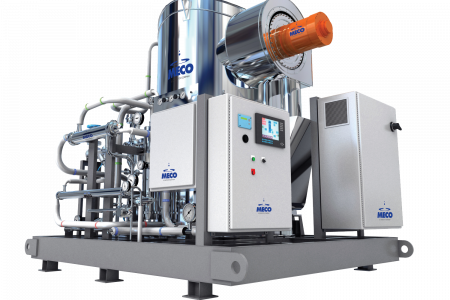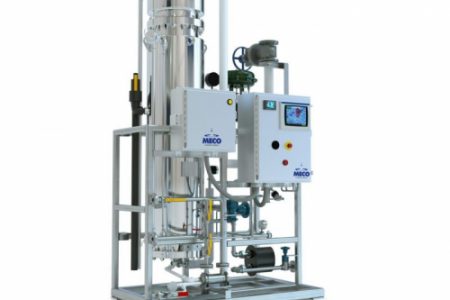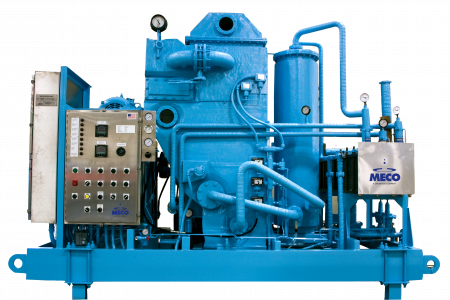
MECO - A worldwide leader in water purification


Membrane Filtration

Better Filtration. Less Maintenance. Obvious Choice.

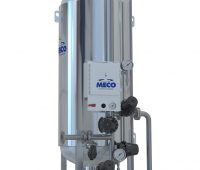
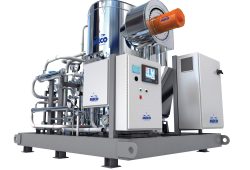
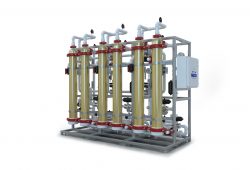
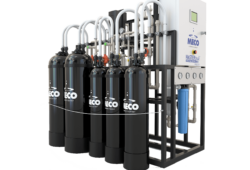
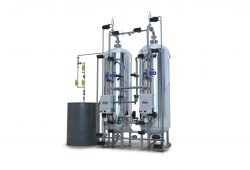
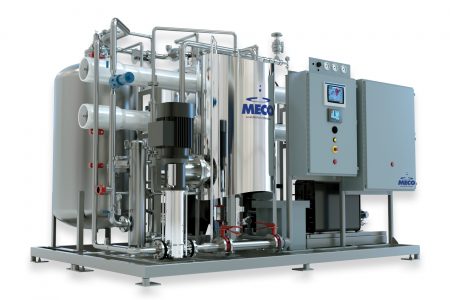
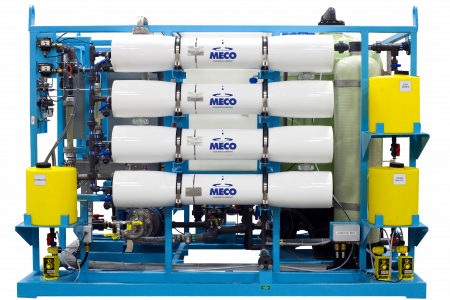
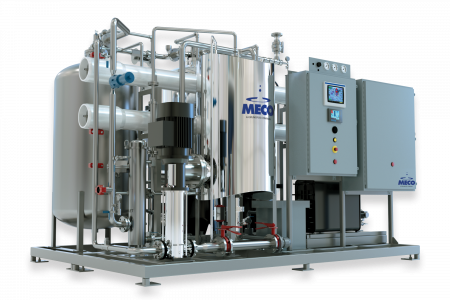
MECO membrane filtration systems offer distinct advantages over conventional filtration process in many biopharmaceutical water system applications. The superior filtration capability of these systems can decrease the performance burden on less tolerant downstream components.


MECO Membrane Filter Systems are designed for removal of suspended solids including bacteria, endotoxins and high molecular weight molecules. This level of filtration offers many advantages, including reduced fouling of any downstream RO membranes and lower endotoxin burden on downstream equipment.

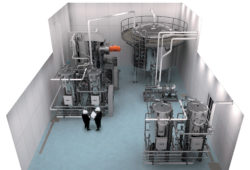
The membrane filters can be provided individually or as part of a total water treatment solution. The control system for the membrane filters can be dedicated to the filter system or part of a total water system. Furthermore, each membrane filter system is equipped with the MASTERedge Package™, a system of features that set us apart from the rest. All MECO clients benefit from MECO's MASTERsupport™ service capabilities.

Backwashable

Hollow-fiber membrane construction allows reverse flow backwash cycles to remove the accumulation of filtered solids.

The backwash cycles, although frequent, are of very short duration. The need for redundant systems to allow for extended backwash cycles is eliminated.

  • 99% removal of suspended solids
  • Endotoxin/BioBurden reduction

Reverse osmosis is used as pretreatment and final treatment steps in many biopharm water systems. Impurities present in the feed water to the reverse osmosis system can build up on the membrane surface and adversely affect performance. RO membranes see two modes of performance degredation due to these impurities: scaling and fouling. Proper pretreament is essential to maximize the performance and longevity of the RO system.

As scalants and foulants build up on the RO membrane surface, higher and higher feed pressure is required to maintain a constant output. The pressure drop across an array of RO elements is usually measured. This differential pressure is a good indicator of the amount of fouling occurring in the membrane array. The differential pressure is calculated by subtracting the RO membrane reject pressure from the feed pressure.

Most commercially available RO membranes have a maximum allowable differential pressure. Operation beyond this maximum differential pressure can result in serious mechanical damage to the membranes due to the large forces that are generated in the flow direction in the membrane. Each membrane sees a larger and larger force as the differential pressure builds towards the end of the array. The permeate tubes see the majority of this force and the last element sees the largest of all the forces created by the pressure drops of the upstream elements.

Traditional Filtration

Media Filters

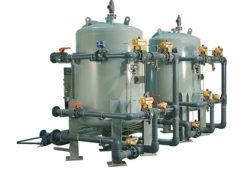
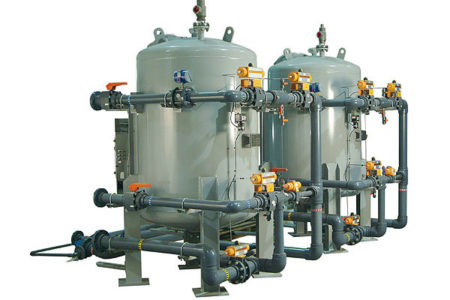
The function of a media filter is to reduce the level of suspended solids present in the feed water. The unfiltered water flows downward through the filter media bed. Suspended solids become trapped in the media bed and remain trapped until the media bed is backwashed. During the backwash process, the flow through the media bed is reversed, the media bed is fluidized, and the trapped solids are released and flushed to drain. Upon completion of the backwash process, flow is redirected downward through the media bed and flows to drain thereby rinsing the media bed before the filter is returned to normal service.

If an uninterrupted flow of filtered water is required, it will be necessary to utilize multiple filter units piped in a parallel arrangement. This will allow one filter at a time to be removed from service and backwashed while maintaining operation.

The filter vessel is sized to provide the proper flow velocity through the media bed and to provide sufficient "freeboard" for bed expansion during the backwash process. The filter vessel is fitted with the appropriate connections to accommodate the required distribution system components. The media bed is composed of one or more layers of media. The size and density of the media in the layers are selected to provide multi-step filtration in normal operation and proper bed stratification during backwash. The internal distribution system insures uniform water flow through the media bed. The fine openings in the distributors prevent media loss and the V-shaped design of the openings prevents clogging.

In order to provide the required modes of operation, service, backwash and rinse, a means of controlling the valves is provided. For units incorporating a multi-port valve, the valve control is an integral part of the multi-port valve. For units with individual valves, a separate timer/stager or programmable logic controller provides the control. A series of valves, or a single multi-port valve, divert the water as required for the service, backwash and rinse modes of operation. The face piping routes the water from the terminal points through the series of diversion valves and into and out of the vessel.

Catridge Filters

Standard disposable or cleanable filtration cartridges are available in a variety of materials and lengths. Nominal cartridge lengths of 10 inches to 40 inches are readily obtainable from a wide range of commercial sources, along with vessels able to accommodate from one to six elements. Filter materials range from spiral wound cotton to various synthetics such as polypropylene and polyester. Filtration ratings down to .2 micron absolute with 99.9 % efficiency are available.

Cartridge filters operate in a dead end flow mode and have a fixed dirt handling capacity. Once exceeded, flow will cease until the element is either replaced or cleaned, if possible.

Membrane Filtration

Membrane-based filtration systems remove suspended solids from water as it passes through a porous membrane. Membranes are classified by their pore sizes. The solids removal performance of various membrane classifications is shown below. Microfiltration and ultrafiltration membranes are effective for the removal of suspended solids and some high molecular weight dissolved solids.

Micro Filtration

Microfiltration employs the use of a porous fiber that filters out most unwanted constituents in feed water. There are several types of microfiltration membranes, such as hollow fiber membranes and spiral wound membranes. These membranes have pore sizes in the range of 0.1 to 1.0 microns.

As an example, a spiral-wound membrane consists of flat sheets wrapped in a spiral configuration similar to a reverse osmosis membrane. The pores in a hollow fiber membrane or spiral wound membrane should be consistently on the order of 0.1 to 0.2 µm in size.

The purpose of microfiltration

Microfiltration provides the end user with the ability to consistently and efficiently remove suspended solids, bacteria, yeast, some viruses, and harmful biological contaminants such as Giardia Lamblia and Cryptosporidium from feed water. Typical fiber material is dependant on the manufacturer and application, but can be commonly found in PVDF (Polyvinylidenefluoride), Polyacrylonitrile, or Polyethylene. Material choice can be dictated upon also considering the Molecular Weight Cutoff of the membrane material. A membrane containing a smaller MWCO provides better overall filtration.

Microfiltration applications

There are a multitude of applications for microfiltration, ranging from pretreatment for the offshore industry to the pharmaceutical industry. This filtration method is commonly used at municipal drinking and wastewater treatment plants as both a pretreatment and polishing mechanism.

A cost effective solution

Microfiltration can be very cost effective in comparison to multi-media and cartridge filtration systems. That's because microfiltration provides the ability to regularly clean the membrane and continue service for much longer periods of time. Filter cartridges typically must be replaced frequently depending on the level of suspended solids, and do not provide the level of filtration equal to microfiltration. This lack of filtration can lead to more frequent downstream equipment maintenance due to faster foulant build-up.

A closer look at a microfiltration system

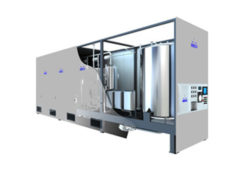
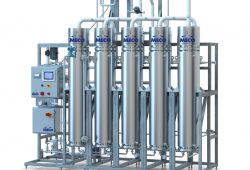
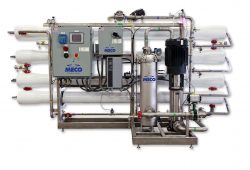
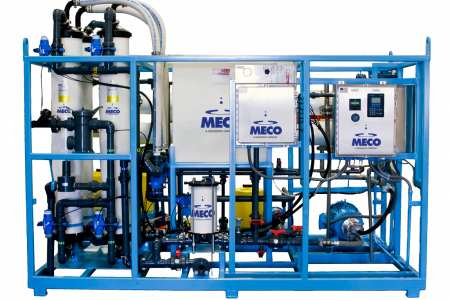
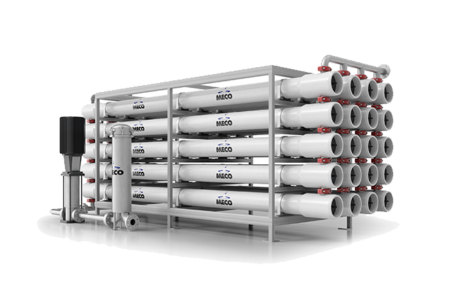
A typical ultrafiltration system consists of a skid frame containing racks that can hold several membranes with valves and instruments to help monitor system properties such as pressure, flow, and backwash frequency. Typical feed pressures for ultrafiltration systems are from 30 to 50 psi. Filtration can occur in one of two ways with a hollow fiber membrane, outside to in or inside to out. Ultrafiltration systems are usually operated in a cross flow mode so that a small amount of concentrated dirty water known is continually sent to waste.

The total amount of filtrate (filtered water) that the membrane makes each day per square foot of membrane surface area is know as flux. Flux is measured in gallons of filtrate per square foot of membrane surface per day. Membrane manufacturers have a ceiling value for the acceptable flux range of any certain element.
    
Flushing and backwashing

While a microfiltration system is in operation, it is often flushed and backwashed to remove deposits from the fiber surfaces. However, the system will eventually need to be cleaned to resume its most effective level of performance by removing caked solids that flushing and backwashing can no longer remove. The main parameter used to show the effectivity and operational cleanliness of a system is transmembrane pressure, or TMP.

When this pressure rises to 30 psi or higher, the suspended solids and other impurities in the water have "caked" on the membrane surface and the loss in pressure as the water moves across the membrane surface exemplifies the level of this caked material. The pores in the membrane wall are effectively clogged and filtrate flow is drastically reduced when the TMP has risen to the upper end of the allowable range.

At this point, the unit can be backwashed with permeate for a specified amount of time and at a particular flow rate. This basically works in reverse of the normal flow path and forces filtrate at a higher flow rate back through the pores dislodging the cake on the membrane surface. The resulting freed particulate is sent to drain.

To further aid in cleaning the membrane surface, a pressurized air scour can also be utilized to help dislodge additional caked-on material. Low-pressure air is injected into the feed flow at the normal flow rate. The air helps to agitate the membrane fibers further loosening any remaining cake. Filtrate is not made during this scouring. The air scour can be done on a less frequent basis depending on how severe the turbidity of the water is.

Using chemicals to clean a system

Although backwashing and air scouring cleans the membranes effectively, there comes a point when it will take a chemical cleaning to restore the membranes to their normal filtration capabilities. Here, a closed loop is formed and cleaning chemicals are circulated through the system. The filtrate is dumped to drain and the reject is recirculated back into the cleaning tank.

The cleaning is stopped and the unit is put back into normal operating mode and all filtrate is dumped to drain for a set amount of time. Normal operation can then be resumed and the new TMP should read near the level of a new membrane. When backwashing, air scouring, and chemical cleaning will no longer reduce the TMP, the membrane is considered to be fouled and must be replaced.

Cleaning frequency

There are several factors that affect the cleaning frequency for a membrane based system. The main factors are operational recovery and the filtrate flux rate. These system factors are optimized to produce the maximum amount of filtrate with the smallest possible cleaning frequency per the end user's needs.

As a rule of thumb, the higher the system recovery and flux rate, the shorter the productive run time will be and subsequent cleaning frequency will increase. By increasing the reject rate, one can allow more of the concentrated, rejected material to be removed via the higher flow rate.

In doing so, it will take a longer time to grow a large film of reject material on the membrane surface thus improving the membrane's productive life between cleanings. Operational recovery is the ratio of filtrate made to the feed flow rate expressed as a percentage. Therefore, if the recovery is raised, permeate output increases accordingly, as does the flux rate.

Ultra Filtration

Ultrafiltration employs the use of a porous fiber that filters out most unwanted constituents in feed water. These membranes have pore sizes in the range of 0.01 to 0.1 microns. There are several types of ultrafiltration membranes such as hollow fiber membranes and spiral wound membranes. As an example, a spiral-wound membrane consists of flat sheets wrapped in a spiral configuration similar to a reverse osmosis membrane. The pores in a hollow fiber membrane or spiral wound membrane should be consistently on the order of 0.1 to 0.2 µm in size.

Ultrafiltration provides the end user with the ability to consistently and efficiently remove suspended solids, bacteria, yeast, some viruses, and harmful biological contaminants such as Giardia Lamblia and Cryptosporidium from feed water. Typical fiber material is dependant on the manufacturer and application but can be commonly found in PVDF (Polyvinylidenefluoride), Polyacrylonitrile, or Polyethylene. Material choice can be dictated upon also considering the Molecular Weight Cutoff of the membrane material. A membrane containing a smaller MWCO provides better overall filtration.

There are a multitude of applications for ultrafiltration ranging from pretreatment for the offshore industry to the pharmaceutical industry. This filtration method is commonly used at municipal drinking and wastewater treatment plants as both a pretreatment and polishing mechanism.

Ultrafiltration can be very cost effective in comparison to multi-media and cartridge filtration systems due to having the ability to regularly clean the membrane and continue service for much longer periods of time. Filter cartridges typically must be replaced quite frequently depending on the level of suspended solids and do not provide the level of filtration equal to ultrafiltration. This lack of filtration can lead to more frequent downstream equipment maintenance due to faster foulant build-up.

A closer look at a ultrafiltration system

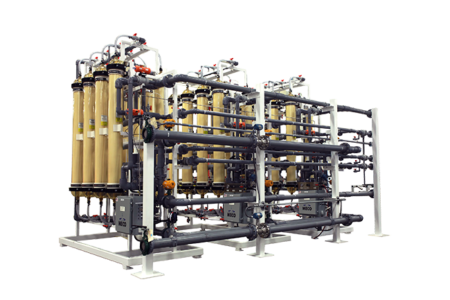
A typical ultrafiltration system consists of a skid frame containing racks that can hold several membranes with valves and instruments to help monitor system properties such as pressure, flow, and backwash frequency. Typical feed pressures for ultrafiltration systems are from 30 to 50 psi. Filtration can occur in one of two ways with a hollow fiber membrane, outside to in or inside to out. Ultrafiltration systems are usually operated in a cross flow mode so a small amount of concentrated dirty water is continually sent to waste.

The total amount of filtrate (filtered water) that the membrane makes each day per square foot of membrane surface area is know as flux. Flux is measured in gallons of filtrate per square foot of membrane surface per day. Membrane manufacturers have a ceiling value for the acceptable flux range of any certain element.

Flushing and backwashing

While a ultrafiltration system is in operation, it is often flushed and backwashed to remove deposits from the fiber surfaces. However, the system will eventually need to be cleaned to resume its most effective level of performance by removing caked solids that flushing and backwashing can no longer remove. The main parameter used to show the effectivity and operational cleanliness of a system is transmembrane pressure, or TMP.

When this pressure rises to 30 psi or higher, the suspended solids and other impurities in the water have "caked" on the membrane surface and the loss in pressure as the water moves across the membrane surface exemplifies the level of this caked material. The pores in the membrane wall are effectively clogged and filtrate flow is drastically reduced when the TMP has risen to the upper end of the allowable range.

At this point the unit can be backwashed with permeate for a specified amount of time and at a particular flow rate. This basically works in reverse of the normal flow path and forces filtrate at a higher flow rate back through the pores dislodging the cake on the membrane surface. The resulting freed particulate is sent to drain. To further aid in cleaning the membrane surface, a pressurized air scour can also be utilized to help dislodge additional caked-on material. Low-pressure air is injected into the feed flow at the normal flow rate. This air helps to agitate the membrane fibers, further loosening any remaining cake. Filtrate is not made during this scouring. The air scour can be done on a less frequent basis depending on how severe the turbidity of the water is.

Using chemicals to clean a system

Although backwashing and air scouring cleans the membranes effectively, there comes a point when it will take a chemical cleaning to restore the membranes to their normal filtration capabilities. Here, a closed loop is formed and cleaning chemicals are circulated through the system. The filtrate is dumped to drain and the reject is recirculated back into the cleaning tank.

The cleaning is stopped and the unit is put back into normal operating mode and all filtrate is dumped to drain for a set amount of time. Normal operation can then be resumed and the new TMP should read near the level of a new membrane. When backwashing, air scouring, and chemical cleaning will no longer reduce the TMP, the membrane is considered to be fouled and must be replaced.

Cleaning frequency

There are several factors that affect the cleaning frequency for a membrane based system. The main factors are operational recovery and the filtrate flux rate. These system factors are optimized to produce the maximum amount of filtrate with the smallest possible cleaning frequency per the end user's needs.

As a rule of thumb, the higher the system recovery and flux rate, the shorter the productive run time will be and subsequent cleaning frequency will increase. By increasing the reject rate, one can allow more of the concentrated, rejected material to be removed via the higher flow rate.

In doing so, it will take a longer time to grow a large film of reject material on the membrane surface, thus improving the membrane's productive life between cleanings. Operational recovery is the ratio of filtrate made to the feed flow rate expressed as a percentage. Therefore, if the recovery is raised, permeate output increases accordingly, as does the flux rate.


Q: Why does MECO's VC still not need filtration in the pretreatment?

A: MECO's VC still does not utilize a spray film evaporator. The natural circulation evaporator will not clog with small particles like the spray nozzles on the spray film design.

Q: Is filtration necessary in the feed to a RO unit?

A: Yes, small particulate mater will embed itself into the first element of the RO array. This will reduce the life of this element as well as increase the pressure drop through the RO unit.

Q: Is there any benefit to using Membrane Filtration instead of the standard multi-media filtration?

A: The Membrane Filter removes suspended solids down to .01 micron as well as other contaminants such as bacteria and some viruses. Multi-media filters (MMF) / cartridge filters will only remove suspended solids to approximately 1-5 micron. When feeding an RO unit, the MF system will significantly reduce the bio-fouling as well as reduce the SDI to below 1.

The MECO Membrane Filtration MASTERedge Package™

Chlorine Tolerant Membranes

The filtration membrane material used in the MECO system is chlorine-tolerant. This feature allows the system to be continuously sanitized by the chlorinated feedwater.

Automatic, Short Duration Backwash

The hollow-fiber membrane construction allows reverse flow backwash cycles to remove the accumulation of filtered solids. The backwash cycles, although frequent, are of very short duration. The need for redundant systems to allow for extended backwash cycles is eliminated. Standout features include:

  • PLC Based Control
  • Galvanized rigid conduit
  • Stainless Steel Airlines
  • Conservative flux rates
  • Instrumented for operation and for maintenance

Anytime. Anywhere.

  • 24 hours, 7 days a week access to effectively manage your water system.

Real Time Access to:

  • Purchase spare parts online
  • Track status of outstanding orders
  • Review shipping information
  • Review invoice/payment history
  • Review online maintenance records
  • Request technical information
  • Online electronic manuals
  • Remote system monitoring capabilities

  MECO understands the importance of providing our customers with the parts and services required to maintain systems operating at optimum capacity. Our online service center - MECO MASTERsupport™ is a good example of that. It enables you to monitor your system remotely, place orders, access service records and view your system's manuals when it's convenient for you. Anytime. Anywhere.

With a simple point and click, our entire parts inventory is available to you. Through the online service center, you also get real-time access to invoices, orders, shipping status, system manuals and service trip reports. Everything you need to know to effectively manage and maintain your treatment plant is right at your fingertips.

It's another example of MECO's commitment to providing the highest quality spare parts and cost effective support throughout the life-cycle of the product.

» Launch MASTERsupport™ Online

Headquarters   12505 Reed Road, Suite 100   •   Sugar Land, TX 77478   •   phone: 281.276.7600   •   tollfree: 800.421.1798   •   fax: 281.313.0643
Copyright ©2012 MECO Incorporated. All rights reserved.