






5 Key Considerations for Maintaining Consistent Water Quality in Regulated Environments

Consistency in critical utility water systems is essential for industries operating in regulated environments. Biopharmaceutical manufacturing, life sciences research, semiconductor fabrication, laboratories, healthcare facilities, and advanced manufacturing all rely on tightly controlled, high-purity water to protect product integrity, meet regulatory requirements, and maintain uninterrupted operations.
In pharmaceutical production, this includes systems designed to generate Purified Water (PW) and Water for Injection (WFI) — utilities that must meet strict pharmacopeial standards and operate with exceptional reliability.
Achieving consistent water quality requires more than treatment alone. It depends on robust system design, properly selected purification technologies, and proactive operational control across the entire water system life cycle.
While many variables influence water system performance, several core factors consistently play an outsized role in maintaining stable water quality. Based on decades of experience supporting high-purity water systems in regulated industries, MECO highlights five key considerations that significantly influence water quality consistency.
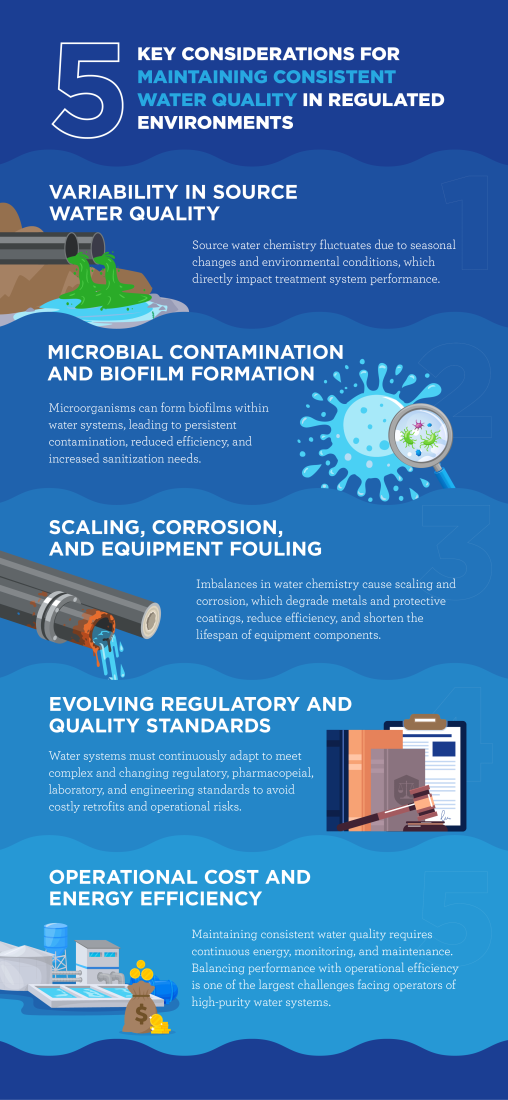
1. Variability in Source Water Quality
All water purification systems begin with source water, and no source remains chemically stable year-round. Municipal supplies, surface water, and groundwater all experience natural variations in:
- Total dissolved solids (TDS)
- Hardness
- Silica
- Organic matter
- Microbial load
- Seasonal contaminants
Seasonal weather patterns, storms, droughts, and environmental conditions can significantly alter incoming water chemistry. These fluctuations directly affect treatment performance, membrane loading, scaling potential, and microbial control strategies.
For high-purity water systems, variability in source water can create instability downstream if treatment systems are not designed to accommodate these fluctuations.
Consistent water quality depends on anticipating change rather than assuming constant inlet conditions. Well-engineered pretreatment and purification systems help stabilize feedwater and protect downstream technologies.
2. Microbial Contamination and Biofilm Formation
Microbial contamination is one of the most persistent risks in high-purity water systems.
When microorganisms enter a water system, they can attach to internal surfaces and form biofilms — structured microbial communities protected by a self-produced matrix. Once established, biofilms are difficult to remove and can continuously release contaminants into the water stream.
Biofilms can lead to:
- Inconsistent microbial counts
- Endotoxin contamination
- Reduced system efficiency
- Accelerated corrosion
- Increased sanitization frequency
Effective microbial control requires both hygienic system design and disciplined operational practices, including:
- Proper material selection
- Hygienic piping design and drainability
- Controlled flow velocities
- Routine sanitization strategies
- Temperature management
- Automation and real-time monitoring
Maintaining microbial control is foundational for pharmaceutical Purified Water systems, WFI generation systems, laboratory water systems, and semiconductor process water applications.
3. Scaling, Corrosion, and Equipment Fouling
Scaling and corrosion are driven by water chemistry imbalances and can significantly impact system reliability and efficiency.
Scaling occurs when sparingly soluble salts — such as calcium carbonate or silica — precipitate onto equipment surfaces. Corrosion results from chemical or electrochemical reactions that degrade metals and protective coatings.
These mechanisms are often interconnected:
- Corrosion creates rough surfaces that accelerate fouling
- Scale restricts heat transfer and flow
- Fouling increases pressure loss and energy consumption
Common impacts include:
- Reduced heat exchanger efficiency
- Restricted piping and membrane flow
- Increased chemical usage
- Shortened equipment life
In high-purity water systems utilizing technologies such as reverse osmosis (RO), electrodeionization (EDI), and distillation, maintaining stable water chemistry is critical to protecting system performance and long-term reliability.
4. Evolving Regulatory and Quality Standards
Water systems operating in regulated environments must comply with multiple layers of regulatory and industry standards. Depending on the application and geographic location, requirements may include:
Environmental regulations
- Environmental Protection Agency (EPA)
Pharmaceutical water standards
- United States Pharmacopeia (USP)
- European Pharmacopoeia (EP)
- Japanese Pharmacopoeia (JP)
- Chinese Pharmacopoeia (CP)
Laboratory water classifications
- ASTM Types I, II, III, and IV
Hygienic engineering guidelines
- ASME BPE
These standards govern parameters including conductivity, microbial limits, endotoxin levels, organic content, materials of construction, surface finishes, cleanability, and drainability.
As regulatory expectations evolve, water systems must remain adaptable. Systems designed without flexibility may require costly retrofits to maintain compliance, increasing operational risk and total cost of ownership.
5. Operational Cost and Energy Efficiency
Maintaining consistent water quality requires continuous energy, monitoring, and maintenance. Balancing performance with operational efficiency is one of the largest challenges facing operators of high-purity water systems.
Globally, water treatment processes account for approximately 2%–5% of total electricity consumption, driven by energy-intensive processes such as:
- Pumping systems
- High-pressure membrane processes
- Thermal distillation systems
Additional operational costs include:
- Membrane replacement
- Resin regeneration
- Filter replacement
- Sanitization chemicals
- Predictive maintenance
Modern high-purity water system designs increasingly emphasize:
- Energy-efficient equipment
- Water recovery optimization
- Advanced automation and monitoring
- Predictive maintenance strategies
These innovations help reduce life cycle costs while maintaining consistent system performance.
Water Treatment Technologies Supporting Critical Utility Systems
Several advanced purification technologies work together to maintain consistent water quality in regulated environments.
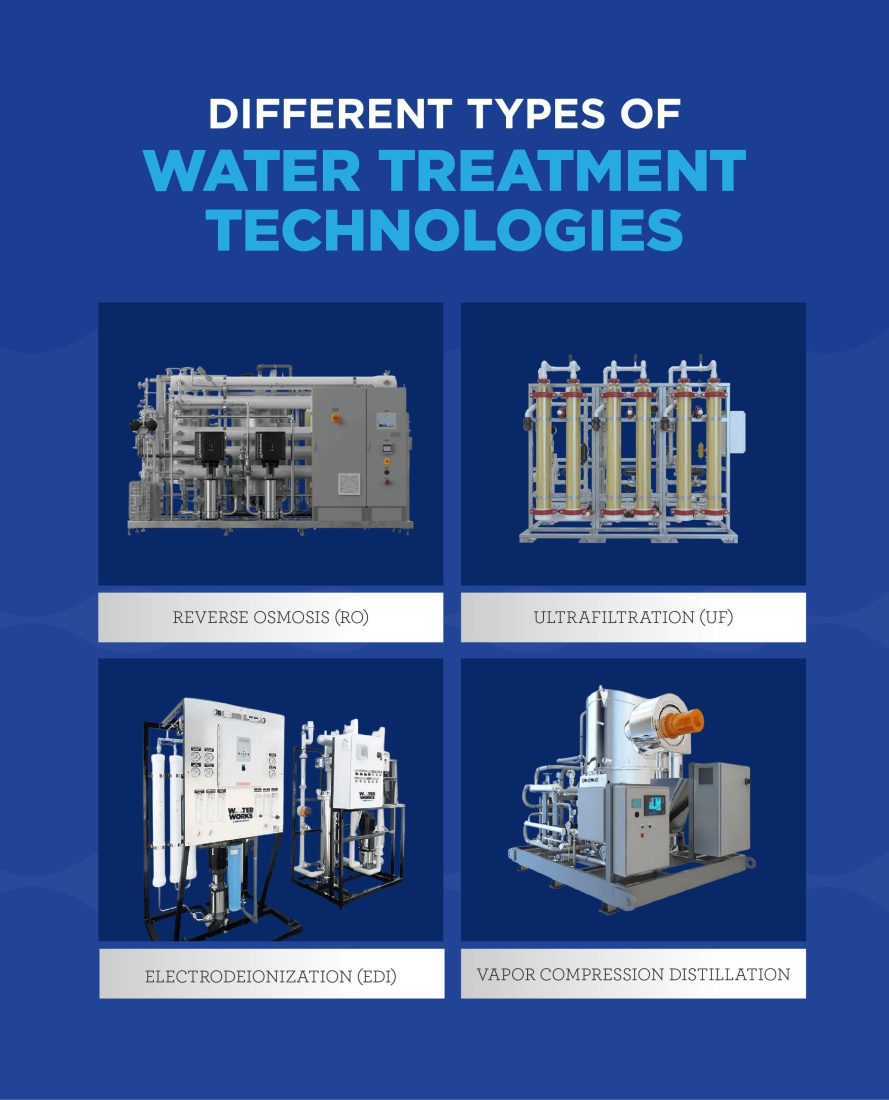
Reverse Osmosis (RO)
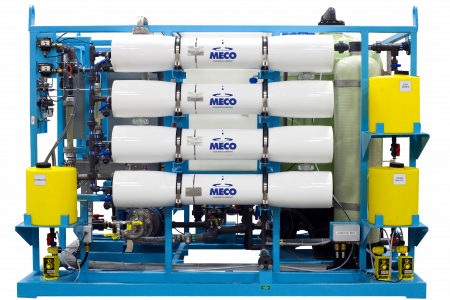
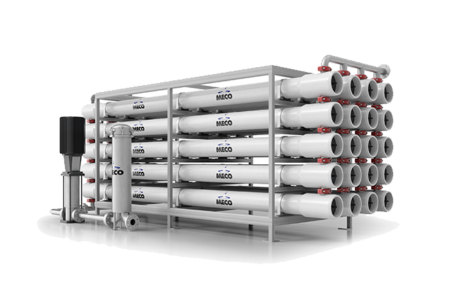
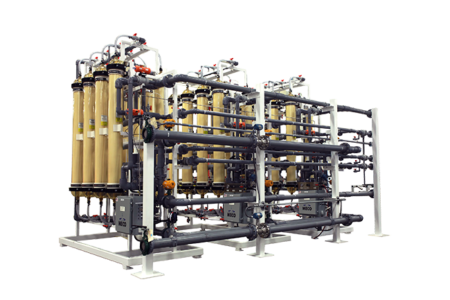
Reverse osmosis uses pressure to force water through a semipermeable membrane, removing dissolved salts, organics, bacteria, and particulates.
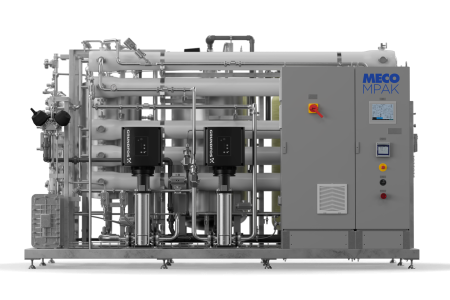
RO forms the backbone of many pharmaceutical Purified Water (PW) systems and high-purity water systems used in regulated industries, significantly reducing contaminant loading on downstream purification processes.
Common applications include:
- Pharmaceutical Purified Water systems
- Laboratory water systems
- Semiconductor process water
- Industrial pretreatment systems
Ultrafiltration (UF)
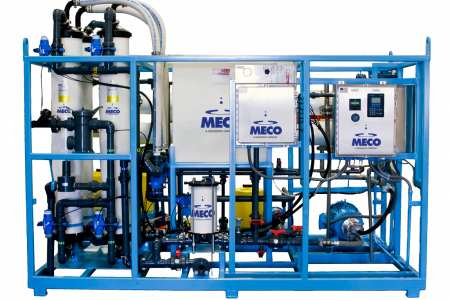
Ultrafiltration removes suspended solids, bacteria, and viruses through low-pressure membranes. It is commonly used as pretreatment for reverse osmosis to stabilize performance and reduce membrane fouling.
Electrodeionization (EDI)
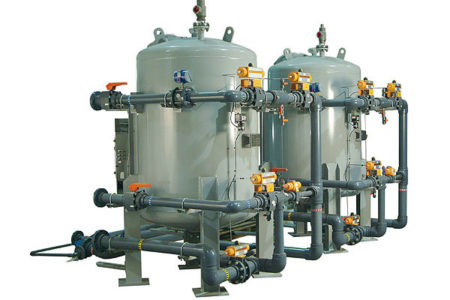
Electrodeionization removes dissolved ions using electrical current and ion-exchange membranes without chemical regeneration.
EDI is widely used to polish reverse osmosis permeate and produce consistently high-purity water for pharmaceutical manufacturing, laboratories, and electronics manufacturing.
Vapor Compression Distillation
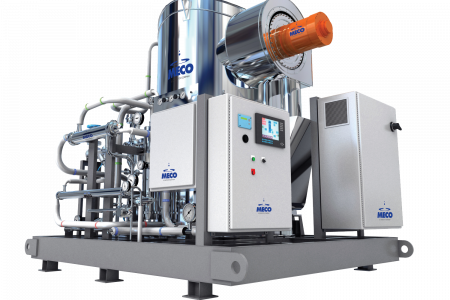
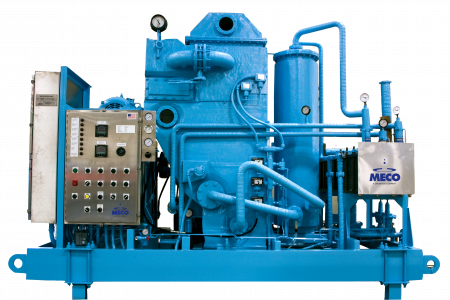
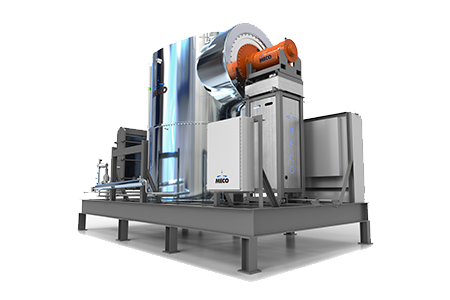
Vapor compression (VC) distillation produces high-purity water by evaporating and condensing water while recovering latent heat through mechanical compression. This technology is widely used in biopharmaceutical manufacturing for the production of Water for Injection (WFI) and other critical utility water streams requiring exceptional purity and reliability.
VC distillation systems deliver extremely stable water quality while achieving high thermodynamic efficiency, making them well-suited for mission-critical applications.
A Proactive Approach to Water Quality Consistency
Consistency in water quality within regulated environments is achieved through engineered system design, real-time monitoring, and lifecycle-focused operational strategy.
By combining advanced purification technologies, automation, and predictive maintenance, organizations can:
- Improve water quality stability
- Reduce energy consumption
- Lower total cost of ownership
- Increase system reliability
- Strengthen regulatory compliance
Long-term system performance also depends on experienced technical support and operational insight. Organizations that maintain stable water quality typically combine strong system design with disciplined maintenance practices, ongoing monitoring, and access to experienced engineers and service professionals.
From source water variability and microbial control to evolving regulatory requirements and energy efficiency, multiple factors influence the long-term stability of high-purity water systems operating in regulated environments.
Organizations that approach water system management holistically — considering system design, purification technologies, monitoring, and long-term operational performance — are better positioned to maintain compliance, protect product quality, and support reliable operations.
Author Bio
Natolie Grabert is a marketing leader in the biopharmaceutical and industrial water industries. At MECO, a Grundfos company, she leads strategic initiatives that position high-purity water systems as critical utilities for pharmaceutical manufacturing and other highly regulated environments.
With nearly 12 years of experience, her work focuses on translating complex water purification technologies into market strategies that support performance, compliance, and long-term operational success.