





How Clean Steam Generators Work: Benefits, Applications, and Selection Considerations
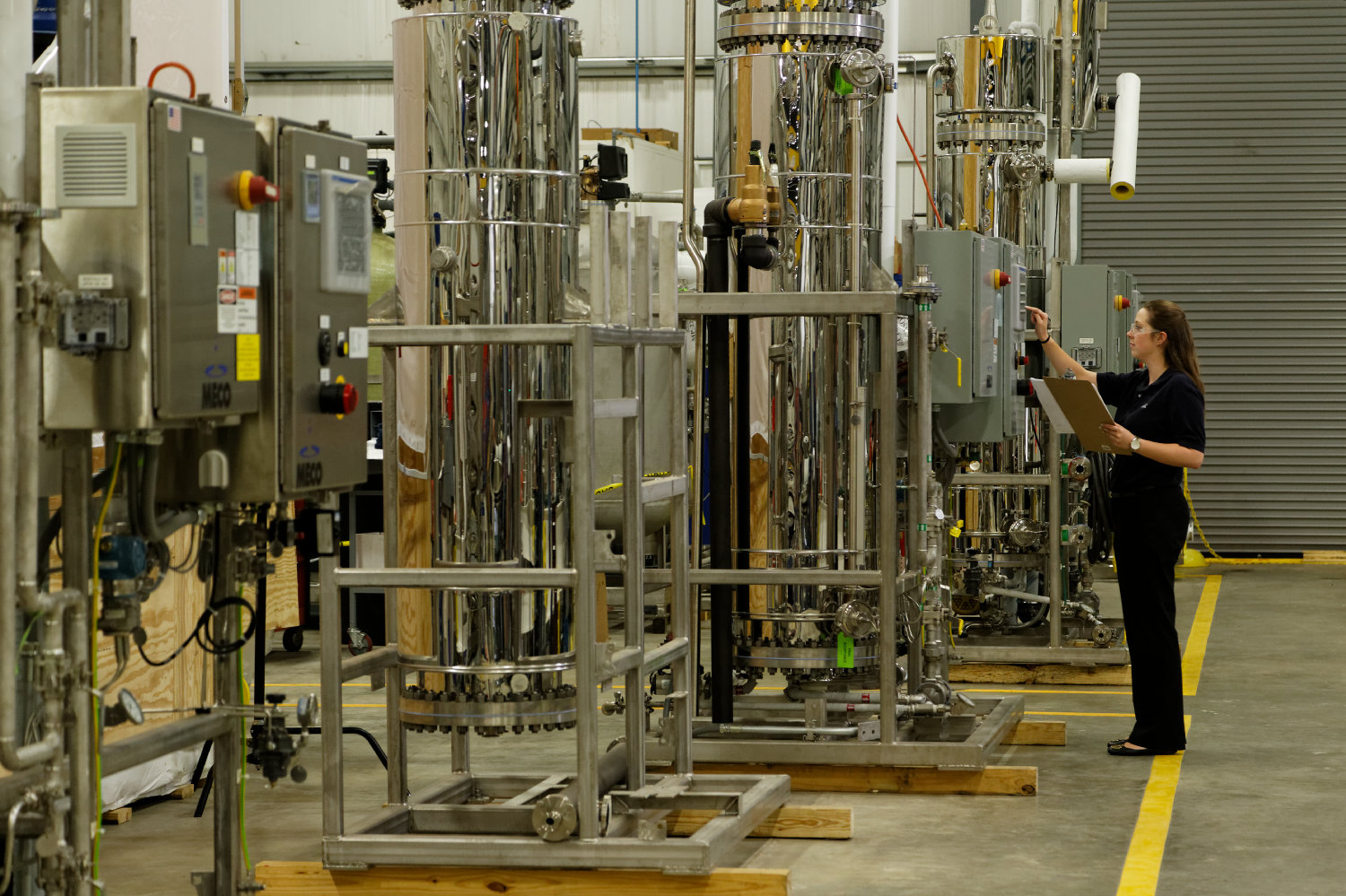
In pharmaceutical manufacturing, steam purity directly affects product quality, patient safety, and regulatory compliance.
Steam used for sterilization, humidification, and direct-contact applications can introduce contamination risks if impurities are present. Understanding how clean steam generators work and how they differ from conventional steam systems helps facilities select the right approach for long-term performance and compliance.
This guide explores clean steam generation technology, common applications, engineering considerations, and the benefits of properly designed systems.
What Is Clean Steam and Why Is It Critical in Pharmaceutical Manufacturing?
Clean steam is steam produced from Purified Water in a dedicated stainless steel generator, free from the chemical additives and contaminants commonly found in standard utility steam.
Conventional plant steam often contains oxygen scavengers, amines, phosphates, and corrosion byproducts that may be acceptable for general heating applications but are unsuitable for regulated manufacturing environments.
In pharmaceutical facilities, steam serves critical functions. Autoclaves, sterilization-in-place (SIP) systems, and clean room humidification units often rely on steam that directly contacts equipment surfaces and, in some applications, the product itself.
Impurities, including rust, chemical residues, particulates, and endotoxins, can contribute to contamination risk, impacting product quality and process reliability. Clean steam generation helps minimize these risks at the source.
What Is the Difference Between Clean Steam and Pure Steam?
| Parameter | Clean Steam | Pure Steam |
|---|---|---|
| Feedwater source | Typically, Purified Water or treated water defined by facility requirementsfacility-specific | Purified Water or WFI-grade |
| Quality standards | Application and facility specific | USP/EP/JP pharmacopeia-defined |
| Bacterial endotoxins | facility-specific Application dependent | <0.25 EU/mL |
| TOC limits | Application dependent | Meets USP <643> |
| Conductivity | Application dependent | Meets USP <645> |
These terms are often used interchangeably, but they represent different quality expectations.
Clean steam broadly refers to steam generated from treated water in a dedicated system without boiler additives. Quality specifications are typically determined by the application and facility requirements.
Pure Steam represents a higher pharmacopeia-defined standard. When Pure Steam condensate is collected, it is expected to meet Water for Injection quality parameters, including bacterial endotoxin limits, conductivity requirements, and Total Organic Carbon (TOC) limits.
Pure Steam generation typically requires tighter engineering controls, higher-quality feedwater, and advanced separation technology to consistently achieve the required condensate quality.
Facilities producing injectable drugs and other regulated pharmaceutical products often require Pure Steam, depending on the application and facility requirements.
How Does a Clean Steam Generator Work?
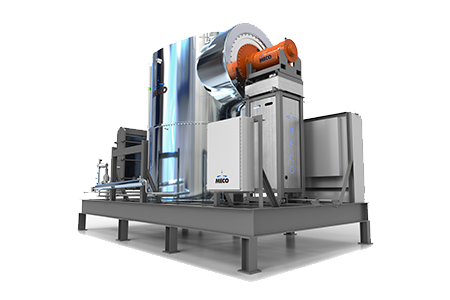
A clean steam generator converts Purified Water into steam through controlled evaporation and separates the resulting vapor from entrained moisture and impurities.
The process generally includes:
Feedwater Intake
Purified Water enters the clean steam generator.
Heat Exchange and Evaporation
A heat source, such as plant steam, electricity, or hot water, heats the feedwater to boiling conditions. In vapor compression systems, mechanical energy compresses vapor to generate the heat required for evaporation.
Steam Separation
Wet steam passes through separation devices designed to remove entrained droplets carrying dissolved solids, endotoxins, and contaminants. Effective separation plays a major role in determining final steam quality.
Steam Delivery
Separated dry steam exits the system at the required pressure and quality specifications.
Control systems continuously monitor:
- Pressure
- Temperature
- Conductivity
- Flow
If condensate conductivity exceeds acceptable parameters, the system can automatically divert steam to drain, preventing out-of-specification steam from entering distribution systems.
Technologies commonly used for clean steam generation include vapor compression and multiple effect distillation approaches, each offering distinct operational and thermodynamic advantages.
What Feedwater PreTreatment Is Required for Clean Steam Production?
The quality of output steam depends directly on feedwater quality.
Pretreatment protects the generator from scale formation, corrosion, and fouling while supporting consistent steam quality.
Common pre-treatment technologies include:
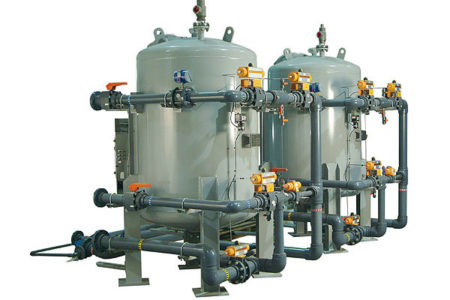
Softening
Removes hardness minerals that contribute to scale formation on heat transfer surfaces.
Dechlorination
Removes chlorine and chloramines that may damage membranes and contribute to material degradation.
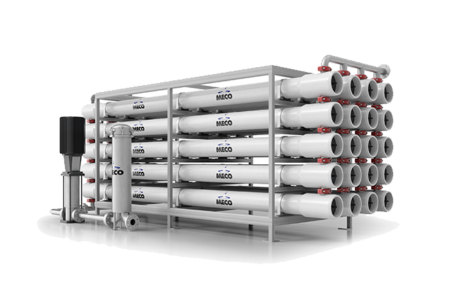
Reverse Osmosis (RO)
Reduces dissolved solids and pyrogens from incoming water.
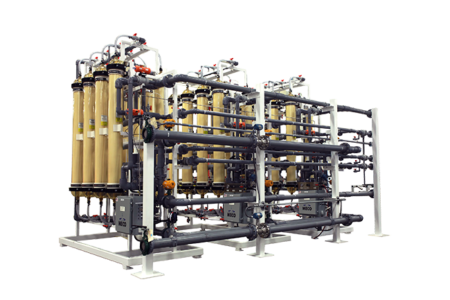
Electrodeionization (EDI)
Further polishes RO permeate to support higher-purity applications.
For systems producing WFI-quality condensate, feedwater typically must meet Purified Water or WFI-grade standards.
A complete pre-treatment strategy matched to source water conditions is critical for long-term performance and reliability.
How Does a Clean Steam Generator Differ From a Conventional Boiler?
Conventional boilers typically use chemically treated municipal water and carbon steel construction materials.
Chemical additives such as oxygen scavengers, pH adjusters, and anti-scaling agents protect the boiler system but can introduce contaminants into the resulting steam.
Clean steam generators take a fundamentally different design approach.
All wetted surfaces are typically constructed from 316L stainless steel, allowing corrosion resistance without chemical treatment.
The sanitary design incorporates:
- Sloped piping for complete drainage
- Orbital-welded fittings
- Polished stainless steel surfaces
- Crevice-free construction
These design elements help minimize microbial risk and support cleanability.
These systems produce steam suitable for direct-contact applications in regulated environments where conventional boiler steam cannot be used.
What Are the Advantages of Clean Steam Generators?
Product Quality and Patient Safety
Removing boiler chemicals, particulates, and endotoxins from the steam supply helps reduce contamination risks during sterilization and production processes.
Steam quality directly impacts the integrity of sterile products, injectable drugs, and medical devices.
Regulatory Compliance
Properly designed and validated systems support compliance with FDA Current Good Manufacturing Practice requirements.
Pure Steam systems designed to generate WFI-quality condensate may support compliance with standards established by USP, EP, and JP pharmacopeias.
Validation activities, including IQ, OQ, and PQ, provide documented evidence of system performance.
Energy Savings and Condensate Reuse
Modern clean steam systems, particularly those using vapor compression technology, can improve efficiency through heat recovery and energy recirculation.
Collected condensate may be returned as feedwater, reducing water usage and minimizing demands on upstream treatment systems.
Over the system lifecycle, these efficiencies can contribute to lower operating costs and total cost of ownership.
How to Choose the Best Clean Steam Generator for Pharmaceutical Applications
Define System Capacity and Facility Requirements
Evaluate:
- Peak steam demand
- Operating pressure requirements
- Temperature requirements
- Simultaneous points of use
- Future expansion needs
Select Feedwater Quality and Pre-Treatment
Assess:
- Source water conditions
- Hardness
- Total dissolved solids
- Chlorine levels
- TOC
Feedwater quality requirements should align with the required steam purity specification.
Evaluate Total Cost of Ownership
Consider:
- Utility consumption
- Water usage
- Maintenance labor
- Consumables
- Downtime risk
- Spare parts availability
- Service support
Lower operating costs over time can often offset higher initial investment costs.
Frequently Asked Questions
What is a clean steam generator?
A clean steam generator produces steam from treated water in a dedicated system without boiler chemicals, supporting applications requiring high steam purity.
What is the difference between clean steam and Pure Steam?
Clean steam broadly refers to steam generated without boiler additives, while Pure Steam meets pharmacopeial requirements and produces condensate meeting Water for Injection quality expectations.
What feedwater is required for clean steam generation?
Feedwater requirements vary by application but commonly include Purified Water and pre-treatment technologies such as softening, reverse osmosis, and electrodeionization.
Can clean steam generators integrate with pharmaceutical water systems?
Yes. Clean steam generators commonly integrate with Purified Water systems, Water for Injection systems, and storage and distribution infrastructure.
What industries use clean steam generators?
Clean steam generators are commonly used in pharmaceutical manufacturing, biotechnology, life sciences, medical device production, and healthcare applications.
Explore Clean Steam Generation Solutions With MECO
Selecting the right clean steam generation strategy requires evaluating steam demand, water quality, operational goals, and long-term performance requirements.
With nearly 100 years of water purification expertise, MECO helps pharmaceutical manufacturers design reliable water and steam systems for critical environments. Backed by a world-class worldwide service network, MECO supports customers with solutions designed for long-term performance, operational reliability, and evolving production needs.
Connect with a MECO expert to discuss your clean steam generation requirements.