






Top-Rated Water Purification Systems for Biopharmaceutical Applications
When evaluating water purification systems for biopharmaceutical manufacturing, it’s tempting to focus on equipment specifications alone. However, experienced pharmaceutical manufacturers know that the highest-performing systems are evaluated on far more than flow rates and conductivity readings. Regulatory compliance, microbial control, validation support, reliability, and lifecycle costs often have a greater impact on long-term success than the generation technology itself.
So what makes a water purification system truly “top-rated” in biopharmaceutical applications?
The answer lies in a system’s ability to consistently deliver compliant water, support validated manufacturing processes, minimize contamination risks, and maintain reliable operation throughout its lifecycle.
The Criteria Used to Evaluate Pharmaceutical Water Systems
Biopharmaceutical manufacturers face unique challenges when selecting water purification systems. Water is often one of the most critical utilities in the facility, directly impacting product quality, regulatory compliance, and operational performance. When evaluating a pharmaceutical water system, organizations should consider:
- Regulatory compliance with applicable pharmacopeia requirements
- Consistent water quality and purity levels
- System reliability and uptime
- Validation and documentation support
- Microbial control strategies
- Energy efficiency
- Operational and maintenance requirements
- Total cost of ownership
- Scalability for future growth
With these factors in mind, the following system categories represent some of the most effective approaches for pharmaceutical water generation and distribution.
1. Integrated Pharmaceutical Water Systems
For many biopharmaceutical facilities, integrated pharmaceutical water systems represent the most comprehensive and effective approach to water purification. Rather than focusing on a single piece of equipment, integrated systems combine pretreatment, water generation, storage, distribution, controls, automation, and validation support into a coordinated solution. This approach helps reduce integration challenges, streamline project execution, and support consistent performance throughout the entire water system lifecycle.
Why They Rank Highly
- Support compliance with applicable pharmacopeia requirements
- Reduce integration risk between system components
- Simplify validation and qualification activities
- Improve reliability through coordinated design
- Support long-term operational consistency
- Provide a scalable foundation for facility growth
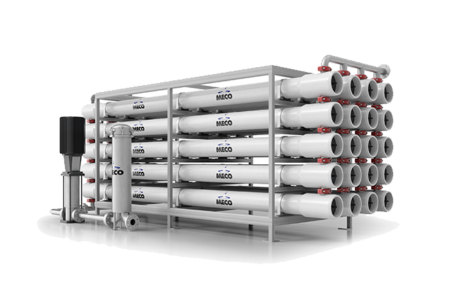
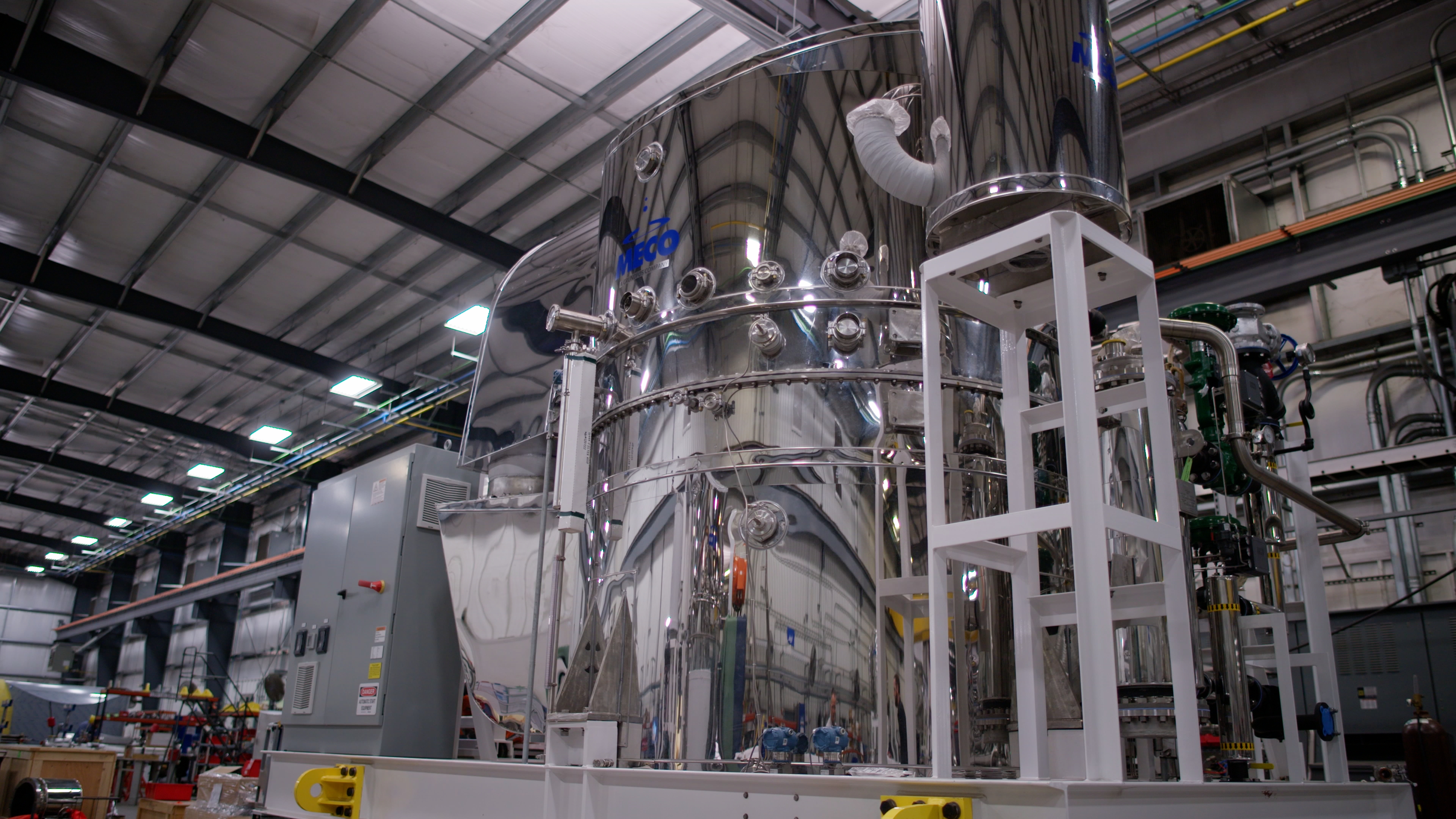
For facilities seeking a fully integrated pharmaceutical water solution, systems such as MECO MASTERfit™ and MASTERpure™ combine pretreatment, water generation, storage, distribution, controls, automation, and validation support into a coordinated platform. These systems can be configured to support Purified Water (PW), Water for Injection (WFI), and Pure Steam applications while helping reduce integration risk and simplify project execution.
2. Water for Injection (WFI) Systems
Water for Injection remains one of the most critical utilities in pharmaceutical and biotechnology manufacturing. Modern WFI systems are designed to consistently produce water that meets WFI quality requirements while supporting regulatory compliance, microbial control, and reliable operation. Today, manufacturers can choose between membrane-based and thermal technologies depending on facility requirements, utility availability, operating preferences, and lifecycle objectives.
Membrane-Based WFI Systems
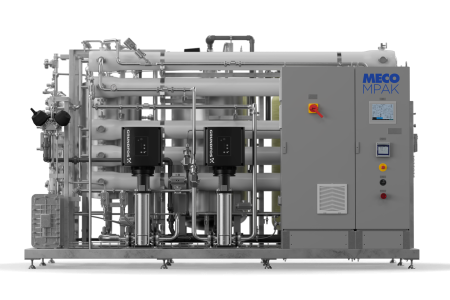
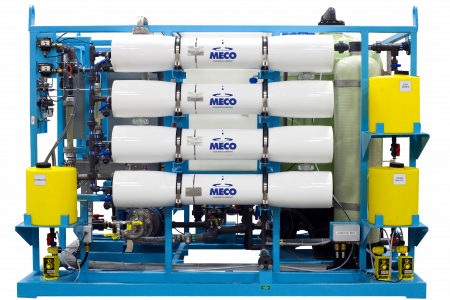
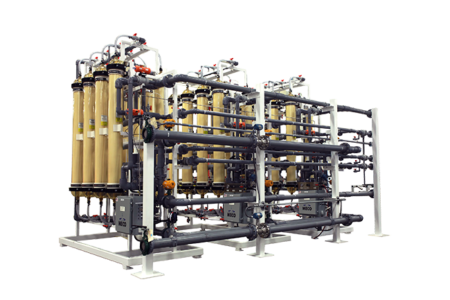
Membrane-based WFI systems utilize technologies such as reverse osmosis (RO), electrodeionization (EDI), ultrafiltration (UF), and UV treatment to produce water that meets WFI quality requirements. Storage and distribution microbial control strategies may include hot water sanitization, ozone, UV treatment, and continuous circulation depending on facility requirements. For manufacturers seeking a modular and integrated approach to membrane-based WFI production, systems such as MECO MPAK combine proven purification technologies into a standardized platform designed to support pharmaceutical water applications while simplifying installation, validation, and future expansion.
Key Benefits
- Reduced energy consumption compared to thermal generation
- Compact, skid-mounted designs
- Modular scalability
- Lower utility demand
- Flexible installation and expansion opportunities
Vapor Compression WFI Systems
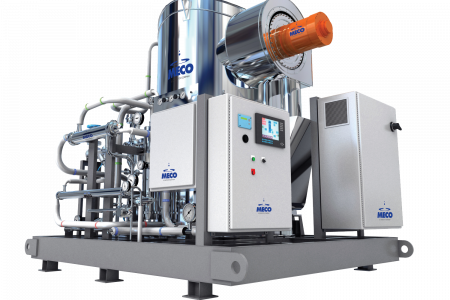
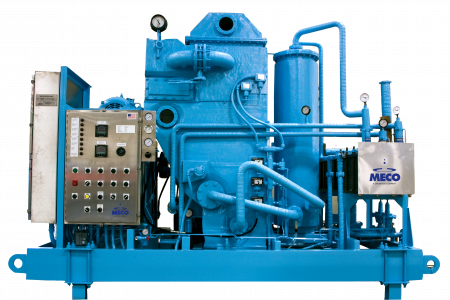
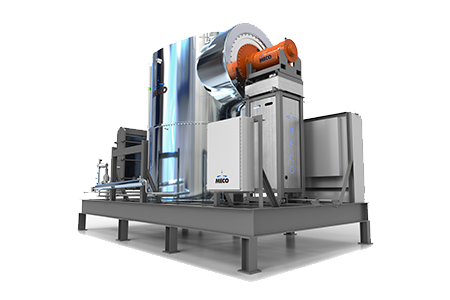
Vapor compression distillation remains a proven technology for WFI generation and is widely used throughout the pharmaceutical industry. Facilities often select vapor compression systems when thermal generation aligns with site standards, operational strategies, or project requirements. MECO’s VC Vapor Compression Still is designed to produce Water for Injection using an energy-efficient distillation process featuring the patented GII Centurbo™ compressor technology. The direct-drive, variable-speed compressor design helps maximize energy efficiency while supporting reliable operation and long-term performance. The MECO VC system is widely used in pharmaceutical and biotechnology facilities where thermal generation aligns with operational requirements, site standards, and overall pharmaceutical water objectives.
Key Benefits
- Proven thermal WFI generation technology
- Excellent microbial control
- High-capacity production capabilities
- Long-term operational reliability
- Energy-efficient vapor compression design
- Well-suited for continuous WFI demand
The most important consideration is not whether membrane or thermal technology is inherently better. The right choice depends on the specific needs of the facility, its utility infrastructure, operational objectives, and long-term growth plans.
3. Purified Water (PW) Systems
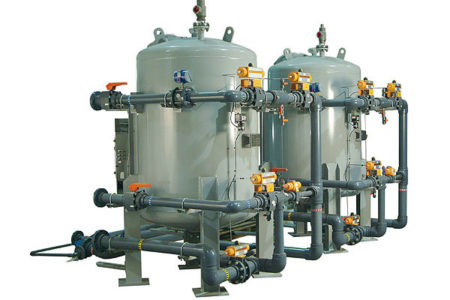
Purified Water is a critical utility used throughout pharmaceutical, biotechnology, medical device, and life science manufacturing facilities. Modern PW systems commonly incorporate pretreatment, reverse osmosis, electrodeionization, UV treatment, filtration, and sanitary storage and distribution design to consistently produce high-quality water for regulated applications.
Why They Rank Highly
- Support USP Purified Water applications
- Lower operating costs when WFI quality is not required
- Support validated manufacturing processes
- Flexible across a wide range of facility sizes
- Can be designed with hot water sanitization capabilities
For facilities seeking a modular pharmaceutical water solution, systems such as MECO MPAK can be configured to support Purified Water generation while providing flexibility for future expansion.
4. Storage and Distribution Systems
One of the most overlooked aspects of pharmaceutical water system design is storage and distribution. Water quality is not only generated—it must also be maintained. Even the most advanced water generation technology can be compromised if the storage and distribution loop is not properly designed, monitored, and maintained.
Why Storage and Distribution Matter
- Maintain water quality after generation
- Support microbial control programs
- Protect product quality and process consistency
- Reduce contamination risks
- Support validation and regulatory inspections
Key design considerations include circulation velocity, dead-leg minimization, sanitization strategy, material selection, instrumentation, and monitoring. Many facilities implement hot water sanitization, ozone, UV treatment, or combinations of these approaches depending on operational requirements and risk management strategies.
5. Pure Steam Generation Systems
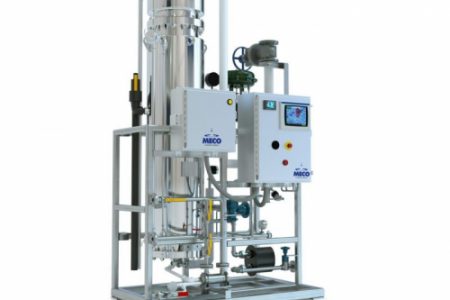
While pure steam generation is not a water purification process itself, it remains a critical utility within many pharmaceutical manufacturing facilities. Pure steam is commonly used for sterilization, steam-in-place (SIP) applications, humidification, and other critical processes where product quality and contamination control are essential. MECO Pure Steam Generators are designed for pharmaceutical and biotechnology applications requiring high-quality pure steam for sterilization and critical process utilities. Engineered to support regulatory compliance and reliable operation, MECO pure steam systems are commonly integrated into broader pharmaceutical water and utility infrastructure projects.
Why Pure Steam Is Important
- Supports validated sterilization processes
- Plays a critical role in contamination control
- Integrates with broader pharmaceutical utility systems
- Supports regulatory compliance efforts
- Requires robust documentation and qualification support
Because pure steam and water systems often work together as part of a facility’s overall utility strategy, they should be evaluated as part of a comprehensive pharmaceutical water infrastructure plan.
6. Compact High-Purity Water Systems
Not every pharmaceutical or biotechnology facility requires a large custom-engineered water system. Research laboratories, pilot facilities, clinical manufacturing operations, medical device manufacturers, and specialty life science applications often benefit from compact high-purity water systems that provide reliable performance while minimizing footprint requirements.
Why They Remain Important
- Small footprint design
- Simplified installation
- Suitable for laboratory and pilot-scale applications
- Scalable pathway to larger pharmaceutical water systems
- Support high-purity and ultrapure water requirements
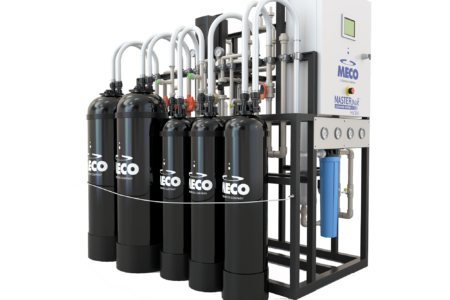
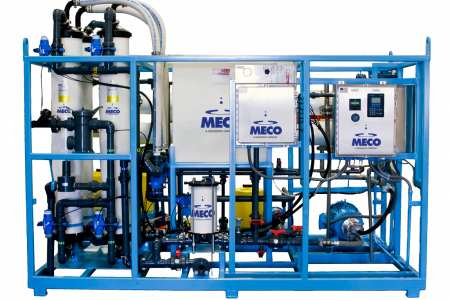
For these applications, systems such as the MECO ES (formerly MASTERpak MICRO) offer a compact, pre-engineered solution designed to support high-purity and ultrapure water production for laboratory, biotechnology, pharmaceutical, and medical device manufacturing applications while maintaining flexibility for future growth.
Why System Design Matters More Than Equipment Selection
One of the most common mistakes organizations make when evaluating pharmaceutical water systems is focusing exclusively on the generation technology. The highest-performing pharmaceutical water systems are not defined by a single piece of equipment. They are defined by how well the entire system works together. Pretreatment, generation, storage, distribution, sanitization, monitoring, controls, validation documentation, and lifecycle support all contribute to overall system performance. A properly designed and maintained pharmaceutical water system helps ensure consistent water quality, regulatory compliance, operational reliability, and long-term value.
Why Biopharmaceutical Manufacturers Choose MECO
For nearly 100 years, MECO has helped pharmaceutical and biotechnology manufacturers solve complex water challenges through engineered water purification systems, Water for Injection generation, Pure Steam production, storage and distribution solutions, and lifecycle support services. MECO offers both membrane-based and thermal technologies, enabling manufacturers to select the solution that best aligns with their operational goals, compliance requirements, and facility needs. From compact high-purity water systems to fully integrated pharmaceutical water infrastructure, MECO provides the expertise, support, and proven technologies required for critical biopharmaceutical applications.
Final Thoughts
The highest-performing pharmaceutical water systems are not defined by a single technology. They are defined by their ability to consistently deliver compliant water, support validated manufacturing processes, minimize contamination risks, and maintain reliable operation throughout the facility lifecycle. Whether evaluating Purified Water, Water for Injection, Pure Steam, or integrated pharmaceutical water systems, organizations should focus on the complete utility strategy—not just the equipment itself. By taking a lifecycle approach to system selection, biopharmaceutical manufacturers can better position themselves for compliance, operational efficiency, and long-term success.
Ready to discuss your pharmaceutical water requirements?
Whether you are planning a new facility, expanding production capacity, or evaluating an existing system, MECO’s team of water purification experts can help identify the right solution for your application. Contact a MECO expert today to discuss your pharmaceutical water or ultrapure water needs.